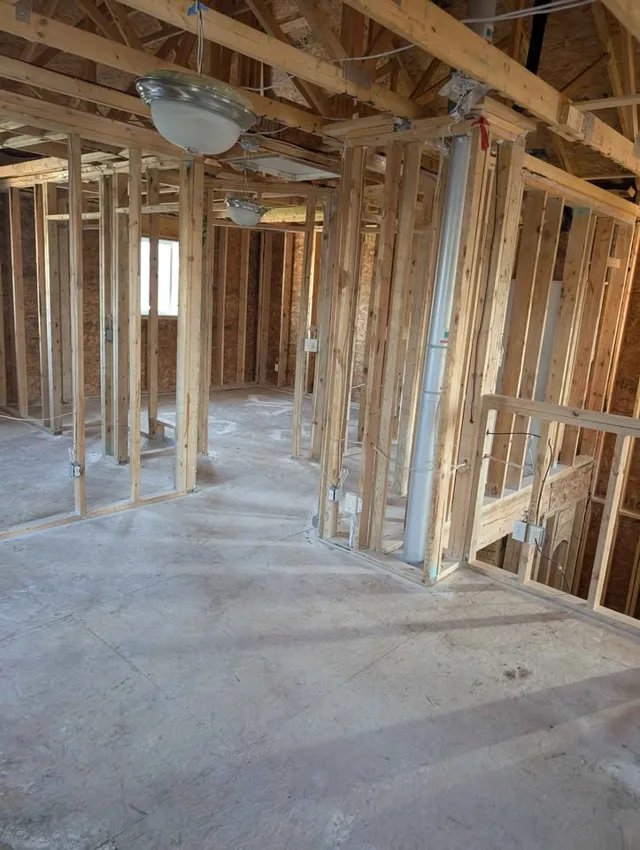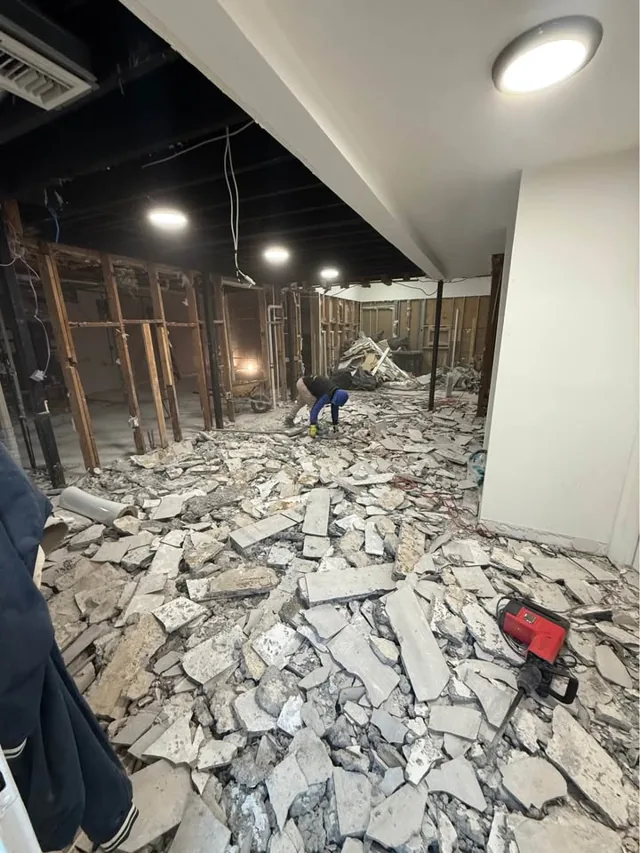
Use an observable end condition
Ask for a description of debris removal, retained materials and the condition of the access route. Broad terms such as clean or ready can hide different expectations. Include areas outside the room if they are part of the agreed handling route.
Separate cleanup from reconstruction
An exposed floor may still need repairs or preparation. A cleared wall may still need professional assessment before new work. Keep those tasks assigned to the appropriate trade instead of assuming they are completed by removal of loose debris.
Check the material route
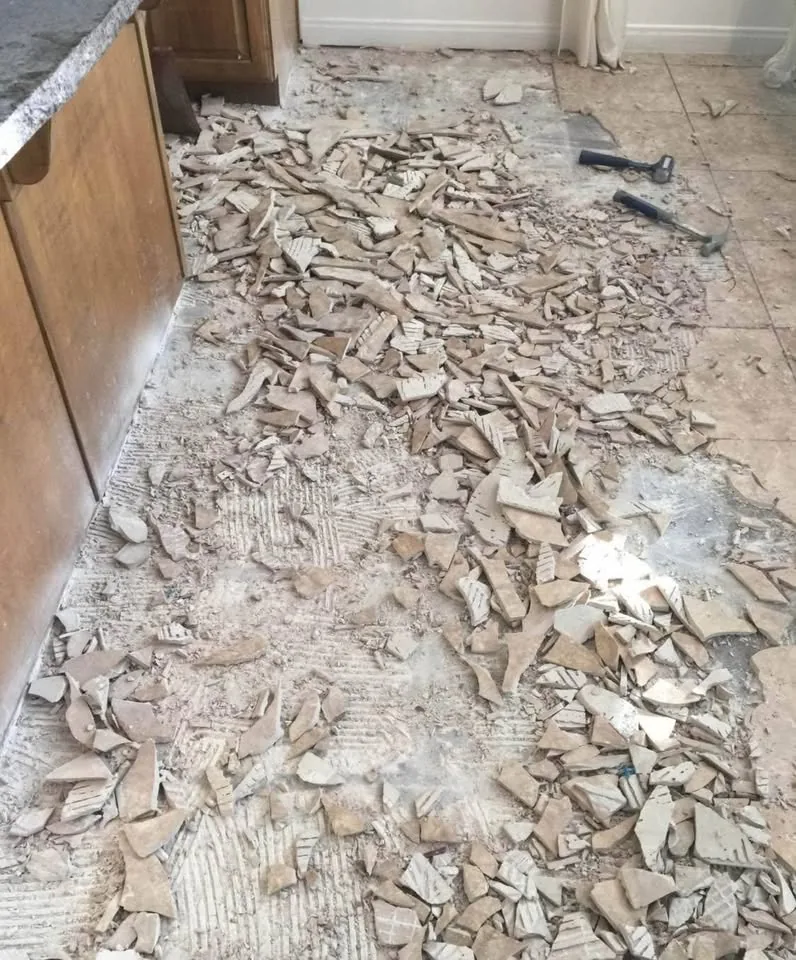
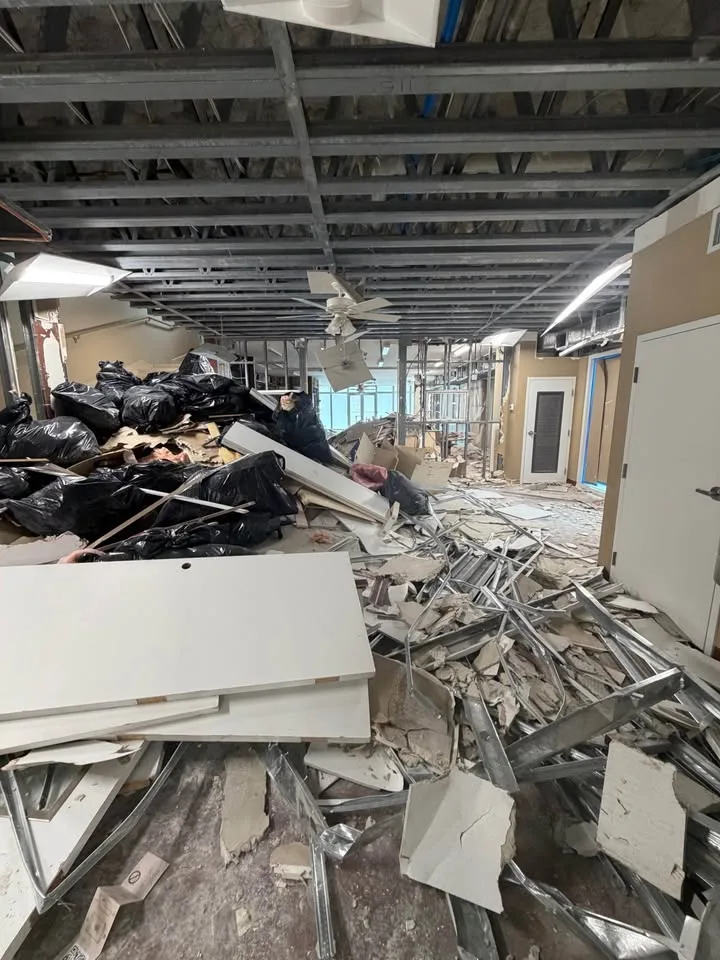
Agree who handles general debris and any materials that require a different process. Do not assume a load is accepted by a receiving facility without checking its conditions. Ask how retained salvage is kept separate from discarded material.
Record the handover
Walk through the agreed scope with the responsible contact, note outstanding items and pass the record to the next trade. Avoid calling the property ready for occupancy or installation on the strength of appearance alone.
Name the surfaces in the handover
A useful cleanup description identifies the work area, the handling route and the debris included in removal. Ask whether the following installer still needs adhesive removal, fine cleaning or surface preparation. Agree where retained salvage goes. These observable items are easier to review than a promise that the room will be spotless.