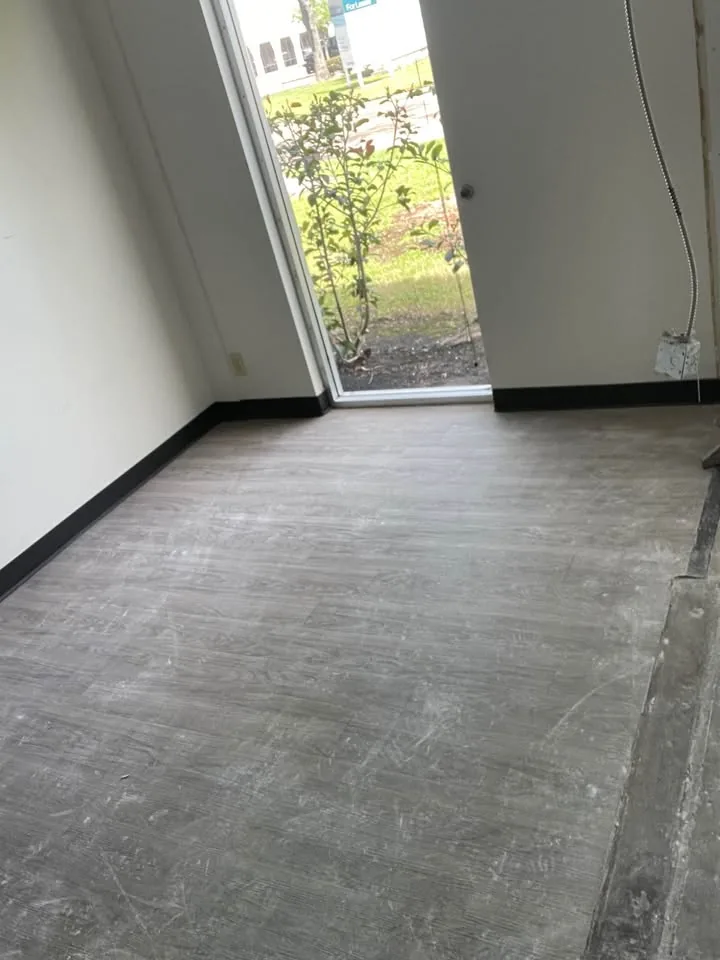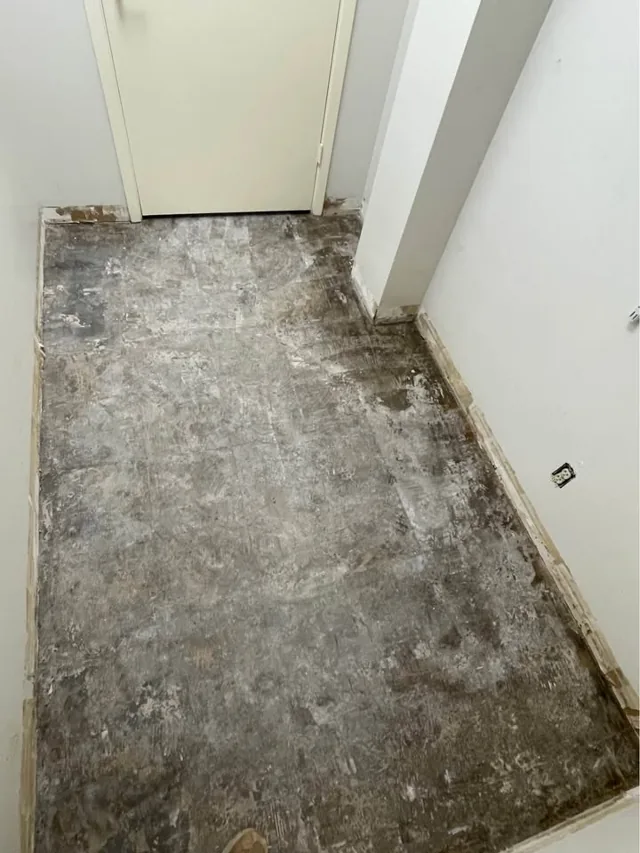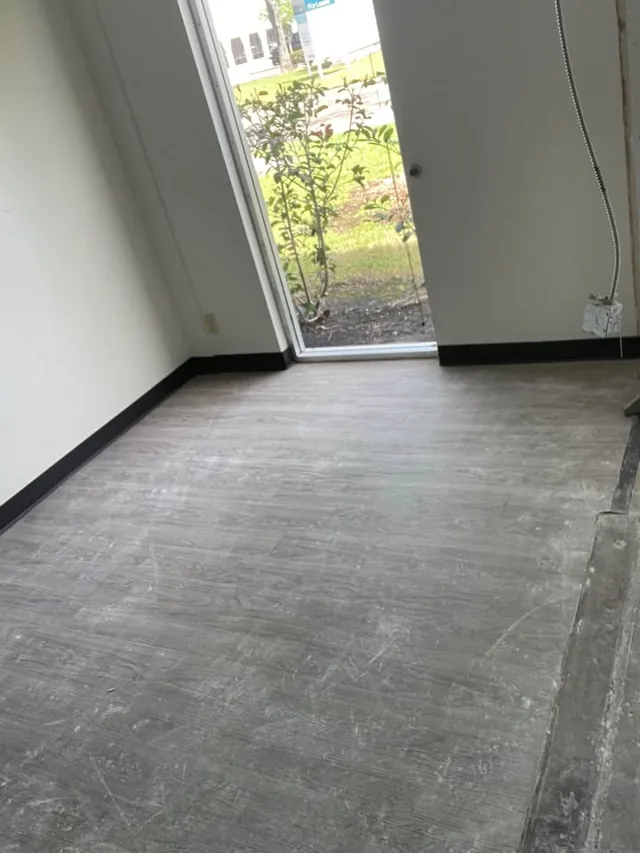
A floor has more than a visible surface
The top finish may sit over adhesive, underlay, older layers or a substrate that also needs attention. Tell us what you know and what is uncertain. Removing the visible finish does not automatically include preparing a surface for a new flooring system.
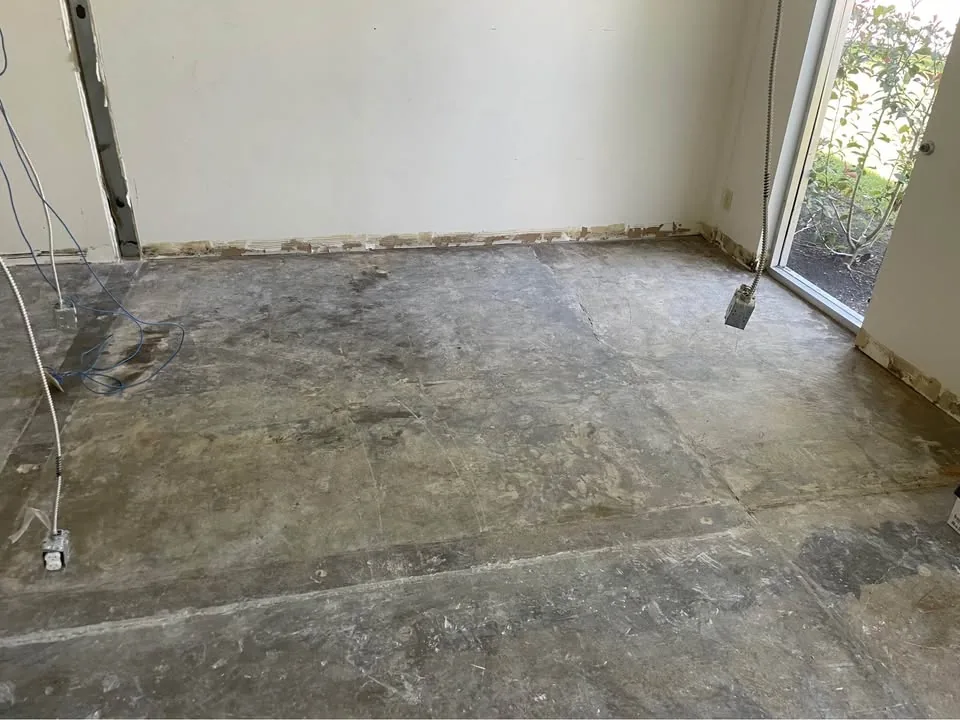
Agree where removal stops
Describe the rooms, doorways and transitions. Note continuous finishes under cabinetry, at stair edges and beside retained flooring. Include whether skirting or trim is to stay. The finish boundary and substrate boundary may need different decisions.
Ask the next installer first
Request a description of the condition the installer expects, including whether residual adhesive, levelling or subfloor repair is their responsibility. Avoid selecting a removal depth from a picture alone. Unknown older materials should be assessed before disturbance; do not scrape a sample yourself.
Prepare the information
A wide photo, a safe existing exposed edge if there is one, room names and access details help establish the discussion. Do not lift flooring just to discover more layers. Remove loose household contents only after confirming the work arrangements.
- Identify retained thresholds and adjoining floors.
- Separate finish removal from levelling and repair.
- Mention known material reports and existing damage.
Tile and hardwood enquiries
For tile, distinguish the finish from setting material, underlayment and the supporting floor. For wood flooring, mention any known installation information and whether you hope to retain or reuse boards. These details help frame assessment; they do not confirm a removal method. Leave unknown layers undisturbed and ask the next installer which condition they need.